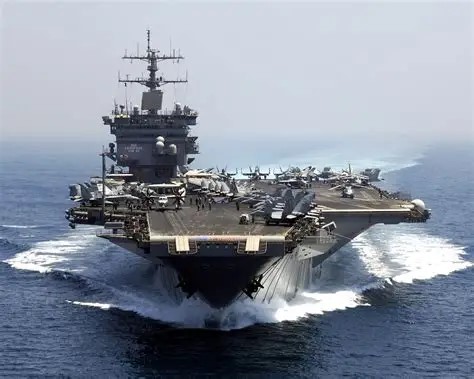
The United States Navy (USN) remains one of the world’s most capable maritime forces, and current Navy news shows a service adapting rapidly to new security challenges. In August 2026, American sailors are operating with international partners, conducting Arctic exercises, developing robotic and autonomous systems, strengthening professional education, and maintaining ships and aircraft around the globe.
For today’s U.S. Navy sailors, readiness means much more than knowing how to operate a ship. Modern naval service requires technical expertise, teamwork, adaptability, and the ability to operate across increasingly complex maritime environments.
Arctic Operations Expand

One of the latest developments involves the USS Wichita (LCS 13).
On August 7, 2026, the Freedom-variant littoral combat ship departed Naval Station Mayport to participate in Operation NANOOK TUUGAALIK 2026, the maritime component of Canada’s premier Arctic exercise. The operation provides an opportunity for U.S. and Canadian forces to strengthen interoperability while operating in the demanding Arctic environment.
For sailors, Arctic operations require careful preparation. Cold-weather conditions, long distances, limited infrastructure, changing weather, and unique maritime geography can create challenges very different from those encountered in more temperate waters.
The Navy’s participation demonstrates the importance of maintaining a global maritime presence while working closely with allies.
International Maritime Cooperation
The Navy is also participating in SEACAT 2026, an international maritime exercise involving Indo-Pacific partners.
The exercise brings maritime forces together to strengthen cooperation, information sharing, interoperability, and responses to regional security challenges. These multinational exercises allow sailors to practice working with foreign navies before a real-world crisis requires coordinated action.
For the individual sailor, that can mean learning different procedures, communicating across organizations, and understanding how American naval capabilities fit into a larger international security network.
Robotics Enter the Fleet
Technology is rapidly changing naval warfare.
On August 5, 2026, the Department of the Navy announced the establishment of a Direct Reporting Portfolio Manager for Robotic and Autonomous Systems (DRPM RAS). The new structure is intended to integrate development, requirements, and acquisition of robotic and autonomous capabilities across the Department of the Navy.
For sailors, this development could eventually influence everything from ship operations and surveillance to logistics, mine countermeasures, maintenance, and intelligence.
Autonomous systems do not eliminate the importance of sailors. Instead, they require highly trained personnel capable of operating, maintaining, supervising, and integrating increasingly sophisticated technology.
The sailor of tomorrow may spend as much time managing information and autonomous systems as traditional sailors spent managing mechanical equipment.
Naval Leadership and Professional Development
Technology is only one part of Navy readiness.
Professional education remains essential for developing leaders capable of making difficult decisions under pressure. On August 3–4, 2026, Acting Secretary of the Navy Hung Cao delivered keynote remarks as the U.S. Naval War College began its 2026–2027 academic year.
Institutions such as the Naval War College help prepare officers to understand strategy, international relations, maritime operations, and the increasingly complicated security environment facing the United States.
Leadership development ultimately affects sailors throughout the fleet because effective commanders and senior leaders establish the standards that shape training, discipline, morale, and operational readiness.
Navy Medicine Supports Readiness
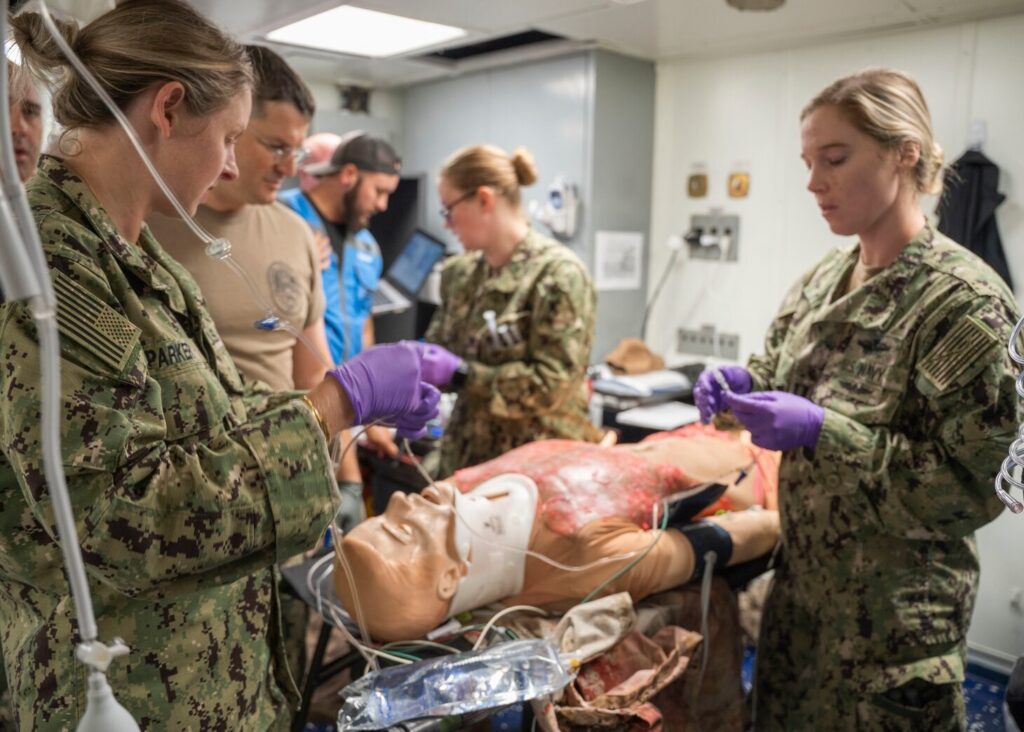
Readiness also depends on taking care of sailors.
On August 7, 2026, Rear Adm. Kevin Brown, commander of Naval Medical Forces Pacific, announced a change of command at Navy Medicine Readiness and Training Command Lemoore. The event underscores the importance of military medical organizations in maintaining healthy, deployable forces.
Navy medical personnel serve aboard ships, at military treatment facilities, and alongside operational units. Their mission is essential to ensuring sailors can remain ready to perform demanding duties.
Shipbuilding and Fleet Modernization
Behind every deployment is a massive industrial and logistical network.
Naval Sea Systems Command reported a leadership transition on August 6, 2026, while continuing its work overseeing some of the Navy’s most important shipbuilding and modernization programs. NAVSEA describes itself as the Navy’s largest systems command, responsible for a substantial portion of the service’s ships and systems.
Modernizing the fleet involves new ships, upgraded weapons, advanced sensors, maintenance, cybersecurity, and improved combat systems.
For sailors, modernization means constantly learning. New technology requires new qualifications, new maintenance procedures, and new ways of thinking about naval operations.
The Sailor Remains the Foundation
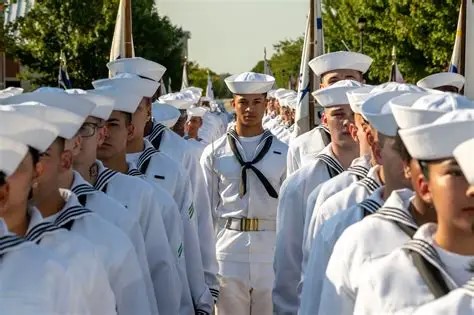
Despite all the technology, ships, aircraft, satellites, autonomous systems, and weapons, the Navy ultimately depends upon people.
Sailors stand watches, maintain equipment, repair machinery, operate weapons systems, navigate ships, provide medical care, manage logistics, prepare food, maintain aircraft, and perform countless behind-the-scenes tasks.
Every successful deployment depends on thousands of individual sailors performing their jobs correctly.
The current USN news illustrates a Navy simultaneously preparing for Arctic operations, strengthening international partnerships, developing autonomous technology, educating future leaders, and modernizing its fleet.
The equipment may change. The missions may evolve. But the Navy’s most important asset remains the American sailor.
Honor Sailors with Military Outfitters
Military Outfitters celebrates the heritage of American sailors and veterans with Navy challenge coins, military apparel, accessories, and commemorative gifts.
Navy Challenge Coins

Challenge coins remain an important military tradition, representing service, achievement, unit pride, retirement, and memorable milestones.
Browse U.S. Navy Challenge Coins at Military Outfitters
The current collection includes Navy veteran coins, warfare-themed designs, Shellback collectibles, and specialized Navy Chief challenge coins.
The US Navy Chief Coins collection includes Surface Warfare, Air Warfare, Submarine Warfare, Seabee, Westpac, and Goat Locker designs—making these coins especially meaningful for Chiefs and Navy veterans.
Navy Accessories
Military Outfitters also carries Navy-themed decals, drinkware, mugs, posters, and other accessories. Many Navy shirt designs can be paired with matching decals, mugs, and other products.
Explore Military Outfitters Navy Products
Navy Shirts & Apparel
Sailors and veterans can choose from Navy shirts representing rates, ranks, Chief Petty Officers, search and rescue, commands, and specialized communities.
The US Navy Rate Shirt allows customers to select a Navy rate and rank and add custom text.
The US Navy Senior Chief Goat Locker Shirt celebrates Chief culture and is designed specifically for Navy sailors, veterans, families, and friends.
For sailors connected to search and rescue, the customizable Combat Search and Rescue Shirt and Navy SAR shirt provide another way to recognize the “So Others May Live” tradition.
Shop U.S. Navy Shirts and Apparel
More Navy Gifts and Collectibles
Military Outfitters offers additional military collectibles, decals, drinkware, custom products, patriotic merchandise, and veteran gifts.
The latest U.S. Navy news demonstrates that sailors are serving in an increasingly sophisticated maritime force. From Arctic exercises and multinational operations to robotics, ship modernization, medical readiness, and professional education, today’s Navy is preparing for challenges across the globe.
Through every technological transformation, one truth remains constant: ships may carry the mission, but sailors make the Navy work.